











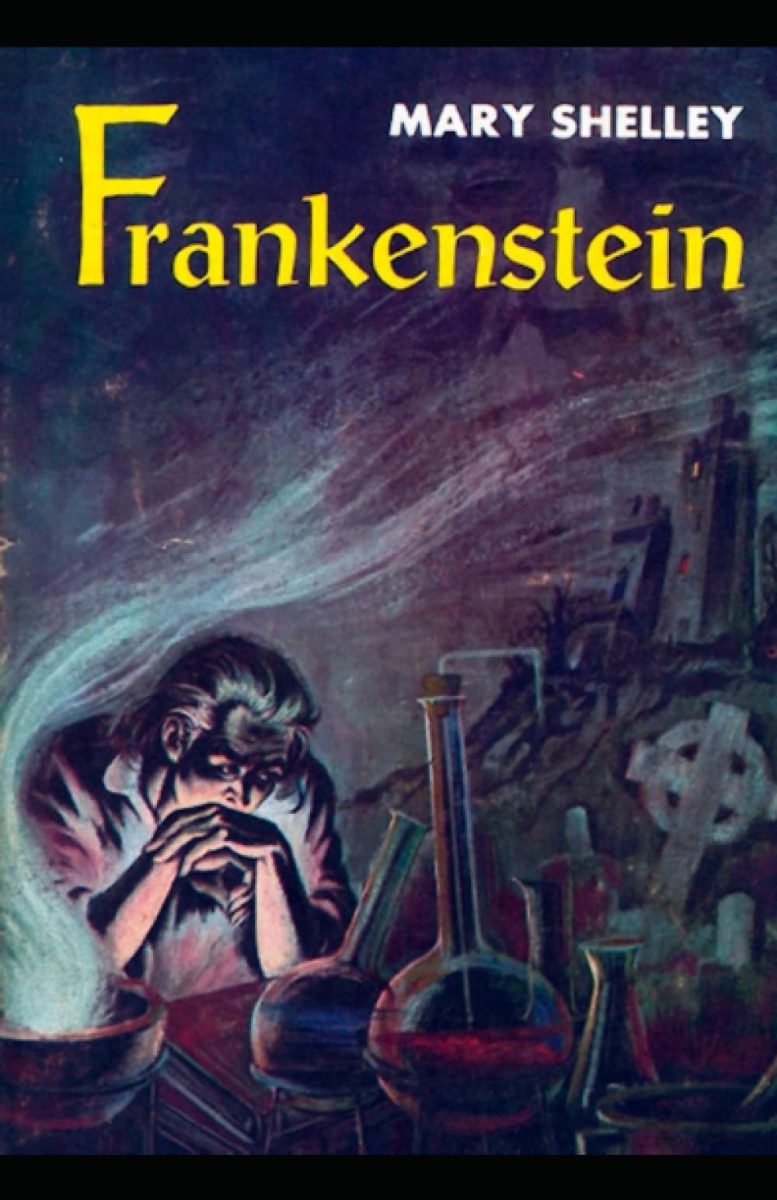
Mary Shelley’s Frankenstein is a monumental achievement in literature. I love this book! The book can be considered the first science fiction novel with its scientific rationalism predicting science’s ability to engage in organ transplant and brain surgery to prolong life. The book is a religious allegory drawing allusions to the Creation Story and Biblical dilemmas highlighted in John Milton’s Paradise Lost. Shelley’s Frankenstein is a literary critique of Christian values, geopolitical Politics of the Napoleonic era, and a debate on scientific morality. Shelley pivots with the idea that just because science can do it, should it? This gives rise to our current debate about genetics.
This said, Frankenstein can still be viewed as a simple Gothic Horror Tale with its blending of terror and romance with dark haunted settings as backdrops. The story is remarkably paced, and one can read it as an unfolding romantic-horror and action story and still be delighted. Yet, if you research names and places and you decide to dig deeper in the story as a piece of layered literature you will be rewarded with critiques of Greek Mythology, primarily the Prometheus Myth, of mankind’s punishment for stealing knowledge from the gods. There are also allusions to the epic poem Rime of the Ancient Mariner by Samuel Taylor Coleridge that again reveal warnings, or omens, warning from God, if one dabbles in forbidden knowledge. Frankenstein is never short of material to research and if one does the research then the amount of insight to be gained by comprehensively digging into this well-crafted layered story is immense. Or you can simply read it as a monster horror gothic story and be delighted.
I cannot recommend this book enough. The language in the story is vivid with deep character emotional dives, expression and vivid landscapes that create in-depth psychological portraits of the characters. An important bit of knowledge to know is that there is not a movie that really captures the novel’s entire narrative nor explores the depth of character in Victor Frankenstein, or The Creature, the main two players in the story. Kenneth Branagh’s Frankenstein (1994) is the most faithful to the novel’s storyline and the recent Gillermo Del Toro’s Netflix Frankenstein (2025) adaptation is exactly that, an adaptation of the novel, as compelling as it is visually, it is
loosely based on the original material. Mary Shelley’s Frankenstein is the best that 19th Century Gothic Horror can bring, a must read, especially for those readers looking to dive into the literary level of storytelling for the first time.