











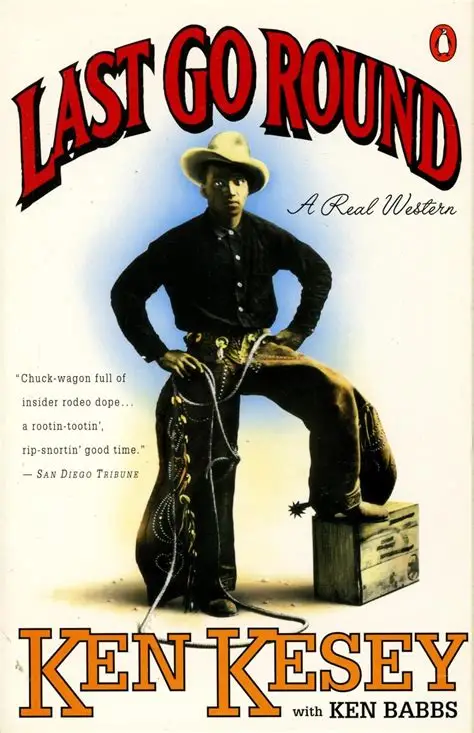




The Last Go Around by Ken Kesey is about the 1911 roundup rodeo in Pendleton, Oregon that fictionalizes a true story of three cowboys: George Fletcher, Jackson Sundown and John Spain. The story has a black cowboy competing for the world’s first world broncobusting championship title. The story is written in a stylized pulp fiction style, with dark and irreverent themes, with a sideways wink, which is always looking for the humorous angle. George Fletcher is the very talented cowboy, overlooked because he is black, and is based on a real-life character. The story examines that if he was “white” he would have won titles and been considered one of the all-time greats. The use of fiction allowed Kesey to examine 1960’s issues like civil rights and racial barriers, but with a creative freedom that allowed him to use humor while discussing serious themes on social justice.
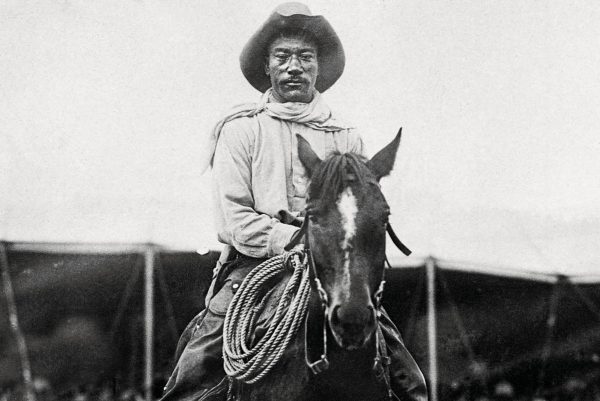
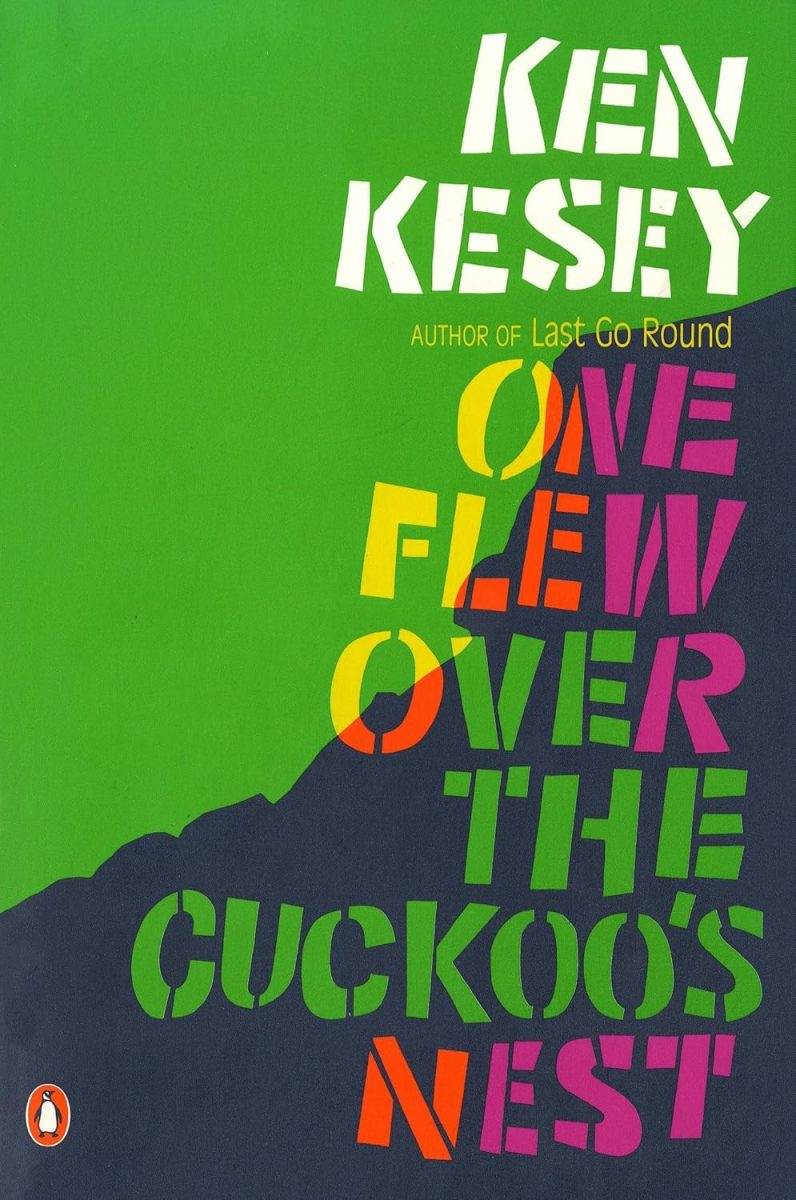
Overall, it is short of a well-crafted literary masterpiece, but none-the-less it is an essential read for those of us who consider Ken Kesey, author of One Flew the Cuckoo’s Nest and Sometimes a Great Notion, to be an American author of great consequence. The real-life photos of the actual characters give this fictionalized pulp western an air of historical importance. The book is informative as it draws reference to black men that would have otherwise been forgotten to history. For example, Bill Pickett was a black cowboy in 1888 famous for biting through the upper lip of a bull and wrestling it to the ground. I love the book, and everything it has taught me, including the questions it asks about racism and bigotry in the United States. Ken Kesey uses history to teach us a lesson about the importance of questioning authority and examining one’s social and cultural norms. Especially, questioning the reality of racial norms which allowed the United States to overcome the legal and social-cultural oppression inherent in a corrupt democratic system of laws that were racist. Ken Kesey is a true visionary, a cosmic social worker fighting for rights of the oppressed.